CrimeTalk

An educational resource for students and staff studying the sociology of crime, deviance and social censure, criminology, sociology of law and socio-legal studies;  the intriguing stuff that made the subject fascinating in the first place. So much of this has now become political that we also discuss politics.

Editorial Editorial

Correspondents

Star InactiveStar InactiveStar InactiveStar InactiveStar Inactive

Biko Agozino is Professor of Sociology and Africana Studies, Virginia Tech, Blacksburg, VA, USA. He has published several books: Essays on Education and Popular Culture, 2019; Critical, Creative and Centered Scholar-Activism (2016, FDP); ADAM: Africana Drug-Free Alternative Medicine, 2006; Counter-Colonial Criminology, 2003; Pan African Issues in Crime and Justice (co-edited), 2004; Nigeria: Democratising a Militarised Civil Society, (co-authored) 2001; Theoretical and Methodological Issues in Migration Research (ed.), 2000; and Black Women and the Criminal Justice System, 1997. Also Director-Producer-Editor of Reparative Justice, 30 minutes, color, African Independent Television, Lagos, Nigeria, 2002; Director-Producer of CLR James: The Black Jacobins Sociology Series, 2008; Director-Producer, Shouters and the Control Freak Empire, Winner of the Best International Short Documentary, Columbia Gorge Film Festival, USA, 2011. Editor-In-Chief of the African Journal of Criminology and Justice Studies, and Series Editor, Ashgate Publishers, Interdisciplinary Research Series in Ethnic, Gender and Class Relations. Ph.D. (Edinburgh); MPhil. (Cambridge); B.Sc. First Class Hons (Calabar).

Alexis A. Aronowitz is a senior lecturer at University College Utrecht in the Netherlands. For 3 years Alexis conducted and coordinated research on human trafficking at the UN Interregional Crime and Justice Research Institute and continued to serve as a consultant on projects on human trafficking for the UN's Office on Drugs and Crime. She as an independent consultant and has contributed to projects on human trafficking for the UNODC, the UN Division for the Advancement of Women, the International Organization for Migration, the Organization for Security and Cooperation in Europe, the International Victimology Institute Tilburg (University of Tilburg), Human Rights First, Management Systems International and Winrock International. She has served as a visiting professor teaching a course on human trafficking at universities in the United States, Germany and the Netherlands and been invited to speak at the Commission on Crime Prevention and Criminal Justice (UNODC), the Vatican and the European Parliament. Alexis has published extensively with 2 books: Human Trafficking, Human Misery The Global Trade in Human Beings (2009) and Human Trafficking: A Reference Handbook (2017). She has a Bachelor of Criminal Justice from Loyola University, New Orleans, and her Masters and PhD in Criminal Justice from the State University of New York at Albany. 

Eleni Dimou is a Lecturer in Criminology at the Open University. She has BA (Sociology, Panteion U., Athens) and MA & PhD in Criminology from Kent. Her doctoral thesis was an ethnographic study of rap and reggaeton subcultures in Havana. Her research explores issues around power and resistance and how these affect configurations of crime, harm and processes of criminalization but also cultural and social change. She particularly focuses on colonialism and its impact today. In terms of resistance, she focuses on subcultures, countercultures and social movements. Overall, Eleni’s research interests lie in the areas of: Social Justice, Coloniality/Decoloniality, Migration, Subcultures, Countercultures, Social Movements, Drugs and Culture, Cultural and Critical Criminology, Latin America and the Caribbean, State Crimes and Harm. Her latest project for BBC is: ‘Is it time to reassess our relationship with nature?’ Her published articles are on the tensions, deviance, power and resistance, inside Cuban underground rap.

Penny Green is Head of the School of Law and Professor of Law and Globalisation, Queen Mary College, University of London. She has published extensively on state crime theory (including her monograph with Tony Ward, State Crime: Governments, Violence and Corruption), state violence, Turkish criminal justice and politics, ‘natural’ disasters, genocide, mass forced evictions, and resistance to state violence. Penny is the Founder and Director of the award winning International State Crime Initiative (ISCI) - a multi-disciplinary international initiative to deliver research-based knowledge on criminal state practices and resistance to them. ISCI is based at QMUL and partnered with the Harvard Humanitarian Initiative, Ulster University and the University of New South Wales (UNSW). Penny’s most recent projects include a comparative study of civil society resistance to state crime in Turkey, Tunisia, Colombia, Papua New Guinea, Kenya and Myanmar; Myanmar’s genocide against its Muslim ethnic Rohingya population; and forced evictions in Palestine/Israel. Her seminal work, with ISCI colleagues, on the Rohingya genocide (Countdown to Annihilation: Genocide in Myanmar 2015; and Genocide Achieved, Genocide Continues: Myanmar’s Annihilation Of The Rohingya 2018) has drawn widespread global attention.

Trevor James got a BA Politics Hull in 1976, and became Research Assistant in the Institute for Health Studies there. This post included teaching on the MA in Health Administration. He worked as a welfare rights advocate and manager until he re-entered higher education from 1993-6, taking the LLM at Lancaster, the MPhil from the Cambridge Institute of Criminology., and the PGCE at  Bolton Institute. His return to working in education began by teaching GCSE (16 yr olds) and A-Level (18) Sociology, Law and Criminology from 1996-2004 and acting as a mental health support worker in the college. His final job was as Head of Sociology in a very large comprehensive school, teaching A-Level Sociology across a consortium of three schools. He retired from teaching in 2017 but continued to work as one of the quality assurance agency AQA’s ‘most accurate’ GCSE/A Level examiners.

Mwenda Kailemiais a lecturer in Liverpool University's Dept. of Sociology, Social Policy and Criminology. before that he taught for 6 years at Keele and Glasgow Caledonian universities for 9 years. He took a first in politics from the University of Nairobi before his MSc in Research at Edinburgh. His PhD was a comparative examination of policing initiatives in Glasgow and Bratislava in Slovakia on transnational crime involving or affecting immigrants who has relocated to Scotland. His forthcoming book with MacMillan, on Neoliberalism and global environmental crimes, will look at our ability to understand, prosecute and redress ecological victimizations. His body of journal articles focus on justice in the global South, peace-building and the international criminal court, environmental crime and refugee rights. 

Blazej Kaucz is an early career researcher in criminology and socio-legal studies. His PhD from University College Cork, Ireland, focused on the process of militarisation of behaviours and its historical roots in Poland.  Current research interests revolve around topics related to critical criminology, organised crime, sociology of professions (inclusive of notions of professionalisation, guilty knowledge, hidden curriculum, the role of textbooks in one's education, and sociology of community), and militarisation (including concepts of militarism, securitisation, and social control). 

Clare Leon  completed her M.Phil (Criminology) in Cambridge before going on to become a Law Lecturer at Leeds University. Her PhD was on Special Constables, and she still remains involved in the area, most recently as a Research Associate for the Centre for Citizens in Policing at Northampton University. Clare moved to Ireland in the 1990s and, as well as continuing her teaching career, worked at the Garda Research Unit conducting research on sexual offences. The work was so stressful that Clare decided to shift her focus away from criminal justice and to work with the healing power of horses instead. Clare now runs an ethical pony trekking business. She spends her days outdoors on a horse, appreciating the beauty of the natural world and sharing it with others. Recently she has taught aspects of green criminology, with a particular focus on animals and crime.

Katie Lowe is an early career researcher in criminology and sociology. Her PhD from the University of Hong Kong, focused on cocaine use amongst privileged expatriates from an edgework perspective. Current research interests revolve around the topics related to drug use and supply, risk and gender. She is currently holds a Post-Fellow Doctoral position at the University of Hong Kong. Her works focuses on drug use and supply during the global pandemic.

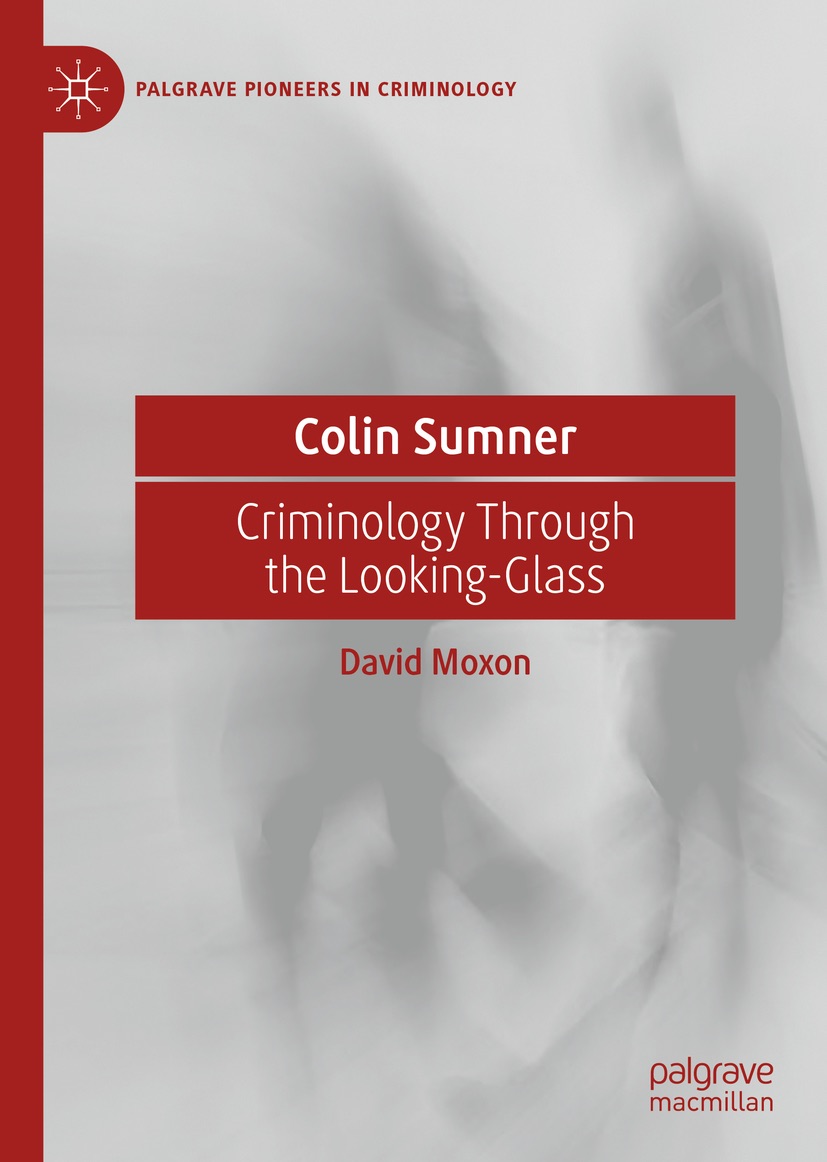
David Moxon holds a degree in law, an MA in international political economy, and a PhD in Marxian legal theory, all awarded by the University of Sheffield. He was formerly senior lecturer in criminology at Sheffield Hallam University. No longer employed in academia, he continues to research and write on criminology in an independent capacity. He is the author of Illegal Drug Use through the Lifecourse (with Jaime Waters, 2017, Routledge) and Colin Sumner: Criminology through the looking glass (2020, Palgrave Macmillan).

Mike Nellis is Emeritus Professor of Criminal and Community Justice in the Law School, University of Strathclyde, Glasgow. He has a PhD on social work with young offenders from the Institute of Criminology, Cambridge, and for many years was involved in training probation officers at the University of Birmingham. He has written widely on probation services and electronic monitoring (EM), including Electronically Monitored Punishment: international and critical perspectives, (2013) co-edited with Kristel Beyens and Dan Kaminski. He has served on two government working parties on EM in Britain (one in Scotland), was long associated with the CEP’s (European) EM conferences and has co-advised the Council of Europe on the ethics of EM. He participated in the Pew Centre’s EM Advisory Group in Washington, USA in 2018, and was briefly international editor for the Journal of Offender Monitoring.

Steve Tombs is Professor of Criminology at the Open University. An early supporter of and contributor to CrimeTalk, Steve has authored several books including Social protection after the Crisis (2015), The Corporate Criminal (2015),  Bhopal: Flowers at the Altar of Profit and Power (2012 with Frank Pearce, CrimeTalk Books), Regulatory Surrender (2010),  Criminal Obsessions: Why Harm matters more than Crime (2008) and Toxic Capitalism (re-issued 2019, with Frank Pearce). He is a co-editor of Revisiting Crimes of the Powerful (2018 with Bittle, Snyder and Whyte) and State, Power, Crime (2009, with Coleman,Snyder and White). His many articles cover toxic capitalism, Grenfell Towers, health and safety at work, social harm, and corporate crime.

Jaime Waters  is a senior lecturer in criminology at Sheffield Hallam University. A Canadian, she holds a degree in sociology from the University of Western Ontario, an MA in international criminology from the University of Sheffield, and a PhD in illegal drug use among older adults, also from the University of Sheffield. Her research work focusses on illegal drug use, gambling, research methods, and emotional labour. She is the author of Illegal Drug Use through the lifecourse (with David Moxon, 2017, Routledge), Mixed Methods in Criminology (with Vicky Heap, 2019, Routledge), and the co-editor of Emotional labour in Criminal Justice and Criminology (with Phillips, Westerby and Fowler, 2020, Routledge).

...more to follow......click on highlighted links to access correspondents university staff pages.

Associate Editors

Star InactiveStar InactiveStar InactiveStar InactiveStar Inactive

Michael Adorjan is Associate Professor in the Department of Sociology, Univertsity of Calgary, Calgary, Alberta, Canada, and a Fellow of the Centre of Criminology at the University of Hong Kong. His research and teaching focus on youth crime and cyber-risk, fear of crime, and perceptions of police. He is currently a Principal Investigator (with Rose Ricciardelli, Memorial University) on a Social Sciences and Humanities Research Council funded Insight Development Grant examining youth and cyber-risk in Canada. His first book, co-authored with Wing Hong (Eric) Chui, Responding to Youth Crime in Hong Kong: Penal Elitism, Legitimacy and Citizenship, was published in 2014. His second book, co-edited with Rose Ricciardelli and also with Routledge, Engaging with Ethics in International Criminological Research, was published in 2016. Michael has published popular articles with CrimeTalk, such as "Cage homes in Hong Kong" in 2011.

Steve Bittle is Associate Professor in the Department of Criminology, University of Ottawa, Ontario, Canada. His research focuses broadly on crimes of the powerful and corporate crime, with particular interest in corporate criminal liability/corporate manslaughter. He held various research and management positions in the Federal Government, including the Department of Justice Canada, the Law Commission of Canada, and the Security Intelligence Review Committee. BA and MA in Criminology from Simon Fraser University, Vancouver, and PhD in Sociology from Queen's University, Kingston, Ontario. His books include Still Dying for a Living: Corporate Criminal Liability after the Westray Disaster (2012) and more recently, as co-editor, Revisiting Crimes of the Powerful: Marxism, crime and deviance (2018), a book that discusses the legacy of Frank Pearce, that early supporter of CrimeTalk. 

Karen Joe Laidler is Professor of Sociology and Director of the Centre of Criminology in the University of Hong Kong. In her native San Francisco and in Hong Kong for the last 30 years, she has worked on a variety of primary and policy related research including: evaluation of drug intervention programmes;  juvenile court intervention; inmate grievance processes; bail reform; sentencing guidelines; risk assessment for juvenile detention; prison planning and classification systems for adult prisons; and drug use problems among methamphetamine users. On the editorial boards of Contemporary Drug Problems and Feminist Criminology, Karen has published widely on topics such as crime and control in China, drug sales, gender and youth, sex work, punishment, domestic violence and border traading. 

Ronnie Lippens is Honorary Professor of Criminology at Keele University. His doctorate in Belgium was a critical assessment of critical criminology and he has published several edited books of a philosophical nature in that area: Representing the Experience of War and Atrocity: Explorations in Visual Criminology (2019 with E. Murray), What is Criminology about? (2015 with D.Crewe), Crime, Governance and Existential Predicaments (2011 with J.Hardie-Bick), New Directions in Criminology (2010 with Van Calster, Existentialist Criminology (2009 with D. Crewe), and  Imaginary Boundaries of Justice (2004). Ronnie's concern for students, and their lack of exposure to philosophy, is reflected in his Very Short, Fairly Interesting and Reasonably Cheap Book about Studying Criminology (2009). Guest Editorial roles for journals such as Social Justice (2005), Crime, Law and Social Change (2004 and 2006), International  Journal for the Semiotics of Law (2004, 2007, 2013), Human Studies: International Journal for Philosophy and Social Sciences (2012), and the Onati Series of Socio-Legal Studies (2015). His interests include organizational theory, late modern global culture, art history and public art, and restorative justice.

Valeria Vegh Weis is Argentinean/German and teaches Criminology and Transitional Justice in Argentina. She is currently an Alexander von Humboldt Post-Doctoral Researcher at Freie Universität Berlin working on resistance and transitional justice. She is also an Associate Researcher at the Max Planck Institute for European Legal History where she focuses on transnational criminal law. She holds a permanent position at the Argentinean Public Defender agency. She has fifteen years of experience working in criminal courts and international organizations. Her book Marxism and Criminology: A History of Criminal Selectivity received awards by the American Library Association and the Academy of Criminal Justice Sciences.

The Editor, Colin Sumner


Colin Sumner

Now 76, retired at 53 and 68. LLB (Birmingham), LLM (Criminology, Sheffield), MA (Teaching Services, Cambridge), PhD (Sheffield), FRSA. Now focussing on editing this and another website coming soon, and writing some long overdue books after a decade in educational management. 

I was a devoted university teacher from 1970-2018, and the sole author of two best-selling books: Reading Ideologies: an investigation into Marxist theory of Ideology and Law (1979) and The Sociology of Deviance: an Obituary (1994, reprinted by myself as CrimeTalk Books in 2012 in English and in Spanish). 

I also edited several books that pioneered developments in critical criminology: Crime, Justice and Underdevelopment (1982), Crime, Justice and the Mass Media (1982), Censure, Politics and Criminal Justice (1990), Social Control and Political Order (1997, with Roberto Bergalli), Violence, Culture and Censure (1997), Policing in a Multicultural Democracy (2000, with Harry Lorenzo), and The Blackwell Companion to Criminology in 2004.

In 1997, with Prof. Piers Beirne. at SMU in Maine, USA, I launched and edited a major international journal for Sage Publications: Theoretical Criminology. I also edited a book series, New Directions in Criminology with the Open University Press.

Teaching has always been as important to me as writing and I have developed, launched and directed over a dozen criminology degrees: at 3 universities: East London, Salford and Cork, Ireland.  Whilst Head of Law at UEL, despite the odds, we established a law school extension from scratch in Haifa, Israel, in 1997 as a joint 'education for peace' project. Despite enthusiastic Presidemtial approval, it was always doomed to fail, a nightmare to administer and in 2000 succumbed to the fear of Hamas bombs. Later, I created, validated and launched Ireland's first undergraduate BA (2014) and PhD (2016) degrees in criminology: they still stand today as monuments to the possibility of change in Ireland. When I retired, I had increased the participation of mature students, mostly women, to a fifth of each cohort and was proud of the international partnerships I had created with St Mary's, Halifax, Nove Scotia, Ørebro University in Sweden and was just creating a further one with Cal State U, Sacramento when I got the well-used UCC/Irish bullying push [for no obvious reason]. My undergrads protested formally and my 6 PhD students were appalled. So I resigned at my top, having had enough of the nonsense and created the 3rd most popular undergrad degree in the country [after Law and Medicine] and enjoying an informal advisory role with Michael D., the excellent President of the Republic. I am reminded of Don McLean - the day the music died....but in my case only after a long series of fights against a variety of establishments. I rest in peace whilst fit enough to be captain of Derbyshire Seniors Tenpin Bowling team.

I realized in the wilderness of retirement that I fell in love with my first full-time job in 1974 at UCW Aberystwyth, a sociology lecturer in a beautiful place with a warm community.  I taught a whole course on Marx's Capital [can you imagine?], and discovered yet again my in depth interest in social theory. My undying thanks to our Prof, professor Jaap Van Velsen, for appointing someone he saw as having a Millsian "sociological imagination" and having the courage of his convictions. At Aber I was also able to establish my teaching of the sociology of crime and deviance. Barry Smart, Ian Taylor, Bridget Pym and Maurice Roche at Sheffield U., Peter Gibbon and Roy Bailey at Sheffield Poly. and Mike Brogden at Bristol Poly. had all previously fostered my passion for understanding how the moral world worked.  

From 1977-95, I became a Lecturer in Sociology at the Institute of Criminology, Cambridge University, and a Senior Member of Wolfson College and Fellow of Hughes Hall. Cambridge for a lad from the lower working-class, divorced parents and no money! I played a lot of cricket as a weekly anaesthetic and got involved with some wonderful female scholars. For 18 years, I flew the flags of sociology, socialism and 'the North' with hard-fought gains over teaching methods and over MPhil. admissions over sexism, racism, and class bias. Apart from many brainy youngsters doing PhDs and undergrad dissertations, I supervised research by several high-flying criminal justice practitioners, some of whom, like Mike Nellis and Paul Condon went on to do greater things. During the 1980s I supervised a brilliant group of PhD students, next door to Steven Hawking and his crew, and my success with their success earned me an MA for Teaching Services when I left for a professorship.

Two of my edited books were with my postgrad students at Cambridge (1990 and 1997 above), and I supervised 18 doctorates to successful completion and over 200 Master's dissertations. Several of these students are now distinguished professors, such as Keith Hayward, Penny Green, Alison Young, Richard Sparks, Cathi Albertyn, Robyn Eckersley and Richard Vogler. 

Over 35 articles of mine are published, many reprinted or translated, and recent ones include the essays "Criminology through the looking-glass", in Amatrudo & Rauxloh's Law in Popular Belief (2017, Manchester UP), "Measure for Measure: Justice in the Society of Censure"in Jacobsen's Poetics of Crime (2014 ed.), and "Critical realism, overdetermination and social censure" in Crewe &  Lippens' What is Criminology About? (2015 eds., Routledge). The full range of my scholarly work has recently been very accurately summarized and interpreted by David Moxon (2020, Palgrave MacMillan) in his Colin Sumner: Criminology through the Looking-Glass. David's bibliography lists all my published articles and reviews.  It was also celebrated in a book edited by Anthony Amatrudo in 2017 entitled Social Censure and Critical Criminology: After Sumner (Palgrave MacMillan). My claims have also been discussed at length by US scholars in The Death and Resurrection of Deviancby Delving, M., Kotarba, J. & Pino, N. (eds. 2014, Palgrave MacMillan).

I was also Director of the Cambridge M.Phil. in Criminology 1981-5, on the Institute of Criminology’s Management Committee and its surveillant Advisory Committee in the House of Lords for many years . In passing, I was an External Examiner at various universities in criminology, sociology and art history, and in 1994-5 an Assessor in Sociology and Social Policy for the Welsh Funding Council. 

With commitment to quality teaching comes management responsibilities. I became Head of School or Dean twice: 1995-2000 in Law, University of East London [UEL], and in Sociology, Philosophy, Criminology, Government & Politics at University College Cork [UCC] in the Republic of Ireland, 2013-17. In 2015, at the Royal Irish Academy in Dublin, I chaired the launch by Irish President Michael D. Higgins of UCC's research centre on the Moral Foundations of Economy and Society; his speech is posted here in CrimeTalk.

On 'sabbaticals', when at Cambridge, I enjoyed stints as Distinguished Visiting Professor of of Sociology, at Queen’s, Kingston, Ontario; a Visiting Professor of Sociology at St. Mary’s University, Halifax,  Simon Fraser University, Vancouver and the Chinese University of Hong Kong; a Visiting Professor of Criminology at Barcelona and Hamburg Universities; a Visiting Professor of Law at the Universities of Dar es Salaam, Tanzania, and Victoria, BC, Canada; and in 1979, my first one, a Visiting Research Fellow in Law and Society at the University of California at Berkeley.

As Head/Dean of Law in East London, I led a multicultural School with over 1100 students and 50 staff on various sites in 2 countries, whilst also active on Academic Board, Professorial Designations Committee, International Marketing, and Research & Research Degree Committees.  I fostered a vibrant research culture in the School of Law and galvanized a team that achieved remarkable advancement in subsequent Research audits. As Head of School at UCC, I fought the case for the social sciences, brought the Departments of Sociology and Philosophy closer together, and managed the integration of Government and Politics into the School; whilst being Programme Director of BA, MA and PhD programmes in criminology. As its Head of Criminology, I remain very proud of expanding mature student admissions, seminar teaching, postgraduate development resulting in a national award for one student, personal tutoring and finally the institutionalization of critical thinking; not to mention the BA degree structure and style that the students loved and which attracted partnerships with universities in several countries. 

Subcategories

  • Newsletters
    Here is a list of all the Newsletters I've sent out.
    Article Count:
    11
Text Size

David Moxon's Colin Sumner: Criminology through the Looking-Glass


CrimeTalk Books

Bhopal: Flowers at the Altar of Profit and Power ebook £2.95 or €3

by Frank Pearce & Steve Tombs


The Sociology of Deviance: an Obituary  New reprint €18 or £15

 Sociologìa de la Desviación: un Obituario  Now discounted to €5

by Colin Sumner


One of the top criminology blogs

Sur.ly safe website

External links

HERO

2023